

A New Standard for Internal Communications
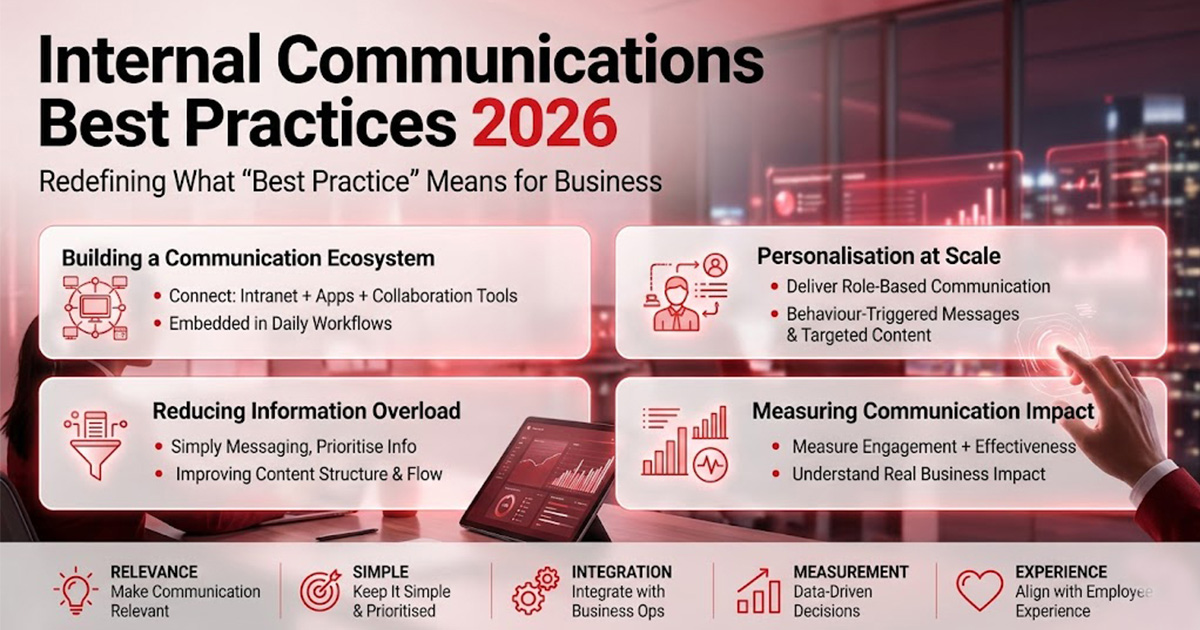
Internal communications is evolving rapidly, and organisations across industries are redefining what "best practice" really means.
Companies such as ING, Philips, Booking.com, and Deloitte are setting new benchmarks for internal communications best practices.
These organisations are moving beyond traditional communication models and adopting strategies that are:
- employee-centric
- data-driven
- integrated into business operations
From Channels to Communication Ecosystems
Leading organisations are no longer focused on individual communication channels.
Instead, they are building integrated ecosystems that connect:
- intranet
- employee apps
- collaboration tools
Companies like Unilever are embedding communication into daily workflows, making it more accessible and relevant.
Personalisation at Scale
One of the most important best practices is personalisation.
Organisations such as Rabobank and Coty are using data to deliver:
- role-based communication
- behaviour-triggered messages
- targeted content
Reducing Information Overload
A key challenge in internal communications is information overload.
Companies like Siemens and Nestlé are focusing on:
- simplifying messaging
- prioritising key information
- improving content structure
Measuring Communication Impact
Measurement is becoming essential.
Organisations such as Aegon and Atradius are using analytics to measure:
- engagement
- communication effectiveness
- business impact
Integration with Employee Experience
Internal communications is increasingly aligned with employee experience.
Companies like Airbnb are integrating communication into:
- employee journeys
- onboarding
- culture initiatives
Conclusion
Internal communications best practices in 2026 are defined by:
- relevance
- simplicity
- measurement
- integration