
Engagement Has Become a Communication Challenge
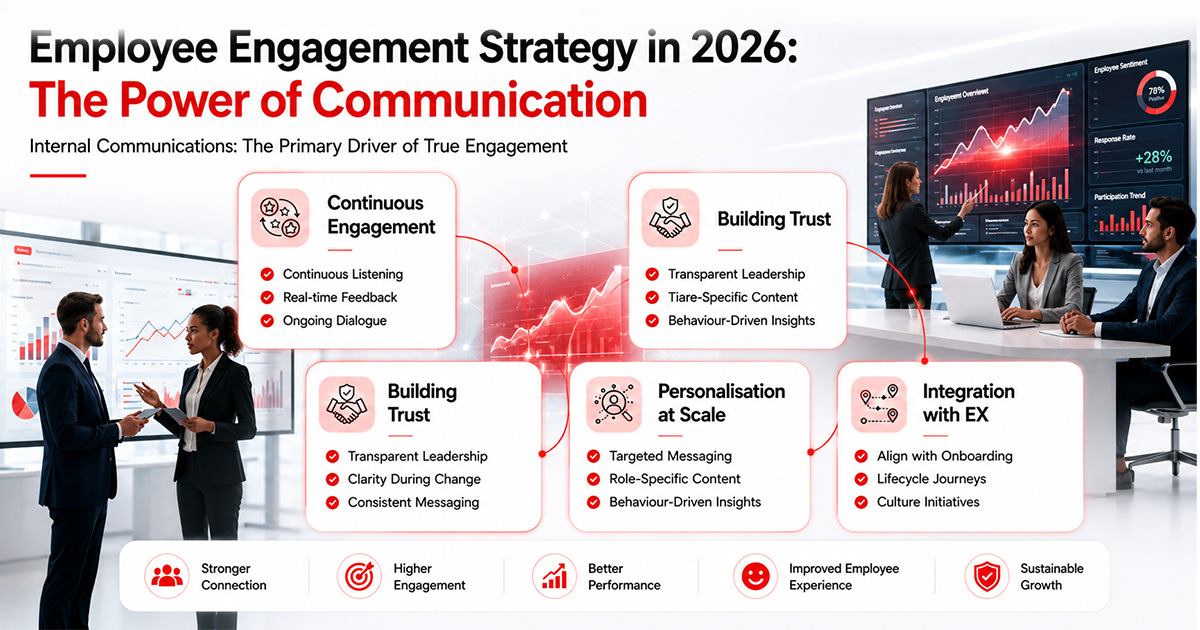
Employee engagement is no longer primarily driven by HR initiatives — it is shaped by how organisations communicate every day.
Companies such as Unilever, Skyscanner, Philips, and Deloitte are redefining their employee engagement strategy by placing internal communications at the centre.
Engagement in 2026 is driven by:
- relevance
- trust
- consistency
From Annual Surveys to Continuous Engagement
Traditional employee engagement strategies relied on annual surveys and static reporting.
Today, organisations are moving toward:
- continuous listening
- real-time feedback
- ongoing communication
Companies like ING are embedding engagement into daily communication flows rather than treating it as a separate initiative.
Trust and Transparency as Core Drivers
Trust is the foundation of engagement.
Organisations such as Atradius and Rabobank focus on:
- transparent leadership communication
- clarity during change
- consistent messaging
Employees expect openness — especially in uncertain environments.
Personalisation and Relevance
Modern engagement strategies rely on personalised communication.
Companies like Coty and Booking.com are delivering:
- targeted messaging
- role-specific communication
- behaviour-driven insights
The Link to Employee Experience
Employee engagement is deeply connected to employee experience (EX).
Companies such as Airbnb are aligning communication with:
- onboarding journeys
- employee lifecycle
- culture initiatives
Conclusion & Next Steps
Employee engagement is no longer a program — it is a continuous communication process.