

The Role of Platforms Has Fundamentally Changed
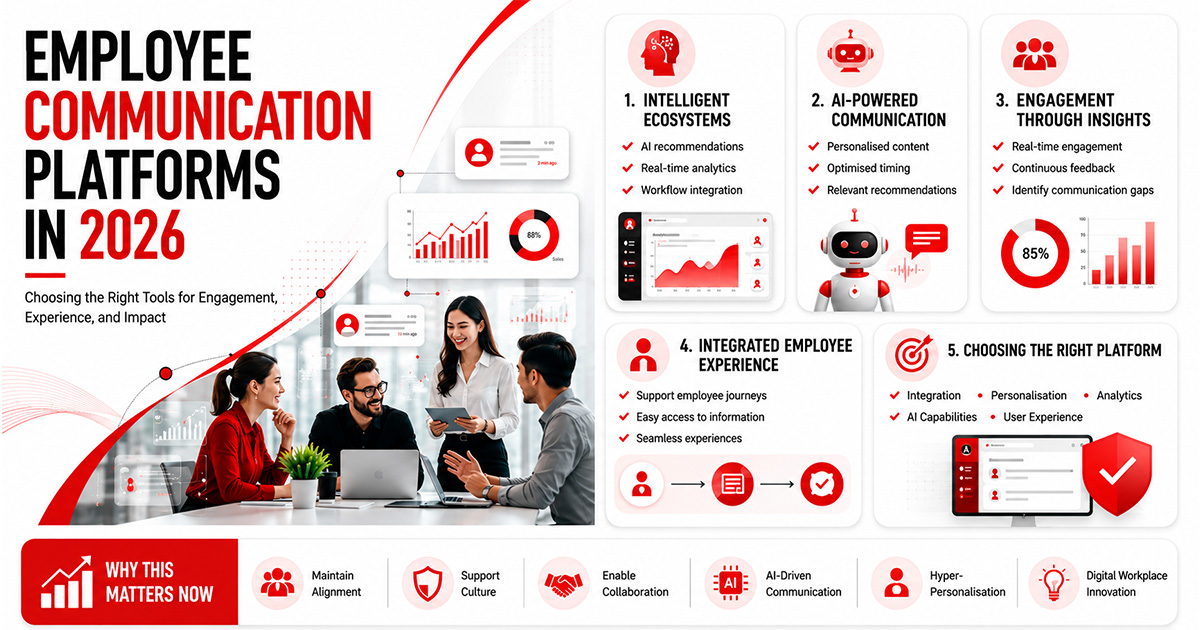
Employee communication platforms are no longer just tools for distributing information.
In 2026, they are at the core of internal communications strategy, enabling organisations to:
- connect employees across locations
- deliver personalised communication
- drive engagement and alignment
Leading organisations such as Amazon, Salesforce, Siemens, and Spotify are investing heavily in advanced employee communication platforms to support their global and hybrid workforces.
These platforms are becoming the digital backbone of communication in modern organisations.
From Static Tools to Intelligent Ecosystems
Traditional communication platforms focused on:
- email distribution
- intranet updates
- basic messaging
Today's platforms are evolving into intelligent ecosystems that integrate:
- AI-powered recommendations
- real-time analytics
- automation and workflows
Companies like Salesforce and ServiceNow are leading the way by embedding communication directly into workflows, ensuring that employees receive information within the context of their daily work.
This is a key driver of digital workplace transformation.
AI and Automation in Employee Communication Platforms
AI is playing a critical role in shaping the future of communication platforms.
Organisations such as Amazon and Spotify are using AI in internal communications to:
- personalise content delivery
- optimise timing of messages
- recommend relevant information
This allows companies to move from generic messaging to highly targeted communication experiences.
The Rise of Employee Engagement Tools
Modern platforms are also becoming powerful employee engagement tools.
They enable organisations to:
- measure engagement in real time
- collect feedback continuously
- identify communication gaps
Companies like Siemens and SAP are using analytics within their platforms to track:
- message reach
- interaction rates
- behavioural responses
This provides internal communications teams with valuable insights to improve performance.
Integration with Employee Experience
One of the most important trends is the integration of communication platforms with employee experience (EX).
Leading organisations such as Airbnb and Spotify are designing platforms that:
- support employee journeys
- simplify access to information
- create seamless digital experiences
This ensures that communication is not just delivered — it is experienced in a meaningful way.
Choosing the Right Platform in 2026
When selecting an employee communication platform, organisations should focus on:
1. Integration
The platform should integrate with existing tools and workflows.
2. Personalisation
It should enable targeted, behaviour-based communication.
3. Analytics
Real-time insights are essential for measuring effectiveness.
4. AI Capabilities
AI should enhance communication, not complicate it.
5. User Experience
The platform must be intuitive and easy to use.
Why This Matters Now
As organisations become more distributed and complex, communication platforms play a critical role in:
- maintaining alignment
- supporting culture
- enabling collaboration
This aligns with broader industry trends such as:
- AI-driven communication
- hyper-personalisation
- digital workplace innovation
Conclusion & Next Steps
Employee communication platforms are no longer just infrastructure — they are strategic enablers of engagement, experience, and performance.
Organisations that invest in the right platforms will be better equipped to:
- connect their workforce
- improve communication effectiveness
- drive business outcomes
If you want to explore how leading organisations are selecting and implementing communication platforms, join Europe's leading internal communications conference in Amsterdam on 2–3 June.
https://www.unleash-digitalcoms.com/
You might also be interested in:
- Digital Workplace Transformation
- AI in Internal Communications
- Employee Engagement Strategy