

Employee Experience Has Become a Business Priority
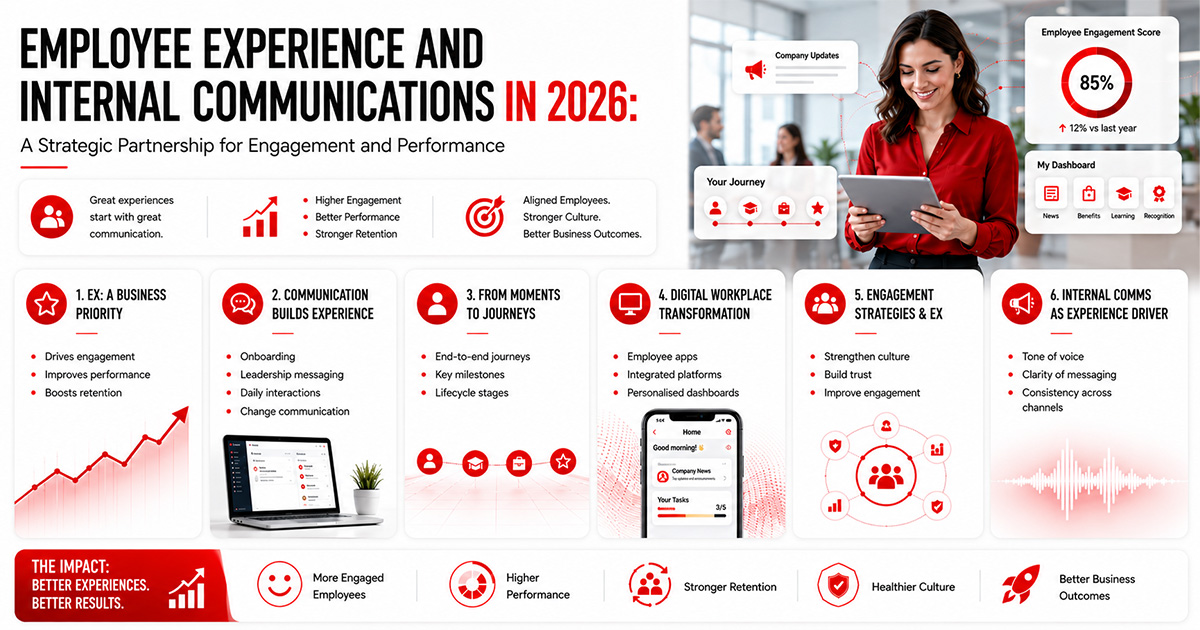
Employee experience is no longer just an HR concept — it is a business priority.
Organisations are recognising that the way employees experience communication, culture, and leadership directly impacts:
- engagement
- performance
- retention
Companies such as Unilever, Philips, SAP, and Airbus are leading the way in aligning employee experience with internal communications.
Communication as the Foundation of Employee Experience
Every aspect of employee experience is shaped by communication:
- onboarding
- leadership messaging
- daily interactions
- change communication
This makes internal communications one of the most important drivers of EX.
From Moments to Journeys
Leading organisations are moving from isolated communication moments to end-to-end employee journeys.
Companies like Booking.com and Coty design communication around:
- key employee milestones
- lifecycle stages
- personal experiences
The Role of Digital Workplace Transformation
Digital workplace transformation plays a critical role in shaping employee experience.
Organisations are investing in:
- employee apps
- integrated platforms
- personalised dashboards
This ensures communication is:
- accessible
- relevant
- seamless
Employee Engagement Strategies and EX
Strong employee engagement strategies are built on experience.
Companies such as ING and Rabobank use communication to:
- strengthen culture
- build trust
- improve engagement
Corporate Internal Communications as an Experience Driver
Corporate internal communications is now responsible for shaping how employees experience the organisation.
This includes:
- tone of voice
- clarity of messaging
- consistency across channels
Conclusion & Next Steps
Employee experience and internal communications are now inseparable.
Organisations that align these two areas will:
- improve engagement
- strengthen culture
- drive performance