

AI Is Redefining Internal Communications
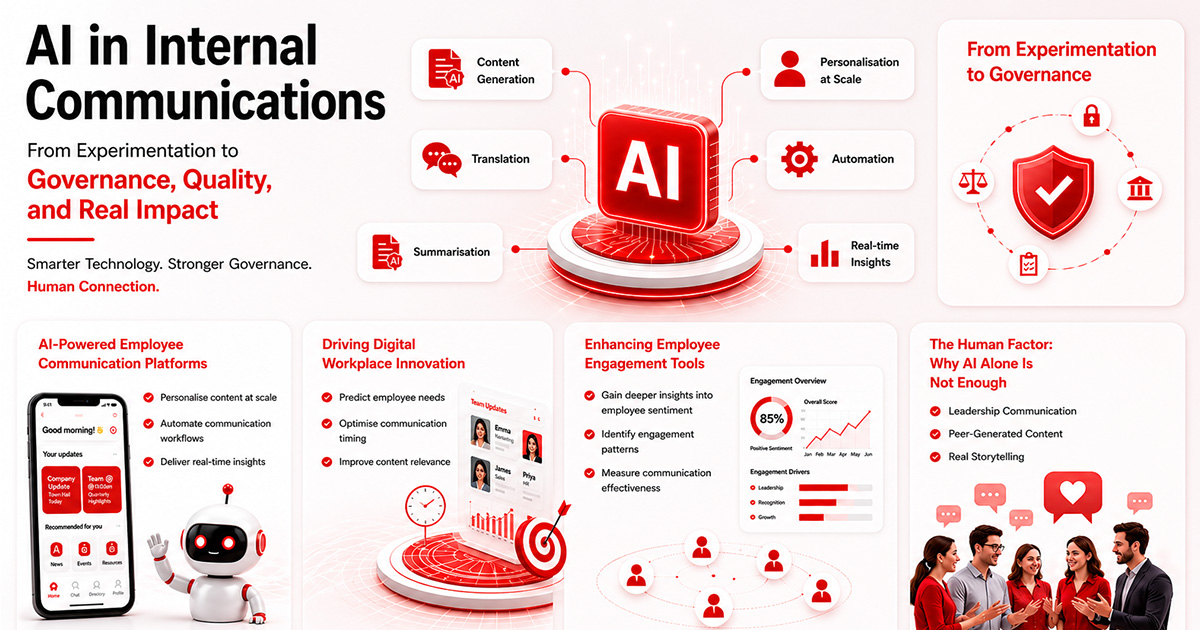
Artificial Intelligence is no longer a future concept — it is actively reshaping how organisations communicate internally.
Across Europe and globally, organisations such as Philips, ING, Unilever, and SAP are leveraging AI in internal communications to improve efficiency, personalise messaging, and enhance engagement.
In 2026, the focus is no longer on whether to use AI — but on how to use it effectively and responsibly.
From Experimentation to Governance
Over the past few years, organisations have been experimenting with AI tools for:
- content generation
- translation
- summarisation
However, the industry is now entering a new phase: AI governance, quality control, and accountability.
Companies like Deloitte and RINA are developing frameworks to ensure:
- consistency of messaging
- compliance with regulations
- protection of company reputation
This reflects a major shift highlighted across internal communications trends.
AI-Powered Employee Communication Platforms
Modern employee communication platforms are increasingly powered by AI.
Companies such as Speakap and Staffbase are enabling organisations to:
- personalise content at scale
- automate communication workflows
- deliver real-time insights
This is a core element of digital workplace transformation, where communication becomes embedded into daily workflows.
Driving Digital Workplace Innovation
AI is also a key driver of digital workplace innovation.
Organisations like Siemens and Nestlé are using AI to:
- predict employee needs
- optimise communication timing
- improve content relevance
This allows internal communications teams to move from reactive messaging to proactive, data-driven communication strategies.
Enhancing Employee Engagement Tools
AI is transforming employee engagement tools by providing deeper insights into:
- employee sentiment
- engagement patterns
- communication effectiveness
Companies like Aegon and Skyscanner are using analytics to refine communication and improve engagement outcomes.
The Human Factor: Why AI Alone Is Not Enough
Despite the rise of AI, organisations such as Henkel emphasise the importance of human communication, authenticity, and trust.
Employees still rely on:
- leadership communication
- peer-generated content
- real storytelling
AI should enhance — not replace — these human elements.
Conclusion & Next Steps
AI is transforming internal communications — but success depends on balancing:
- technology
- governance
- human connection
If you want to explore how organisations like Philips, ING, and Deloitte are implementing AI in real internal communication environments, join Europe's leading internal communications conference in Amsterdam.